

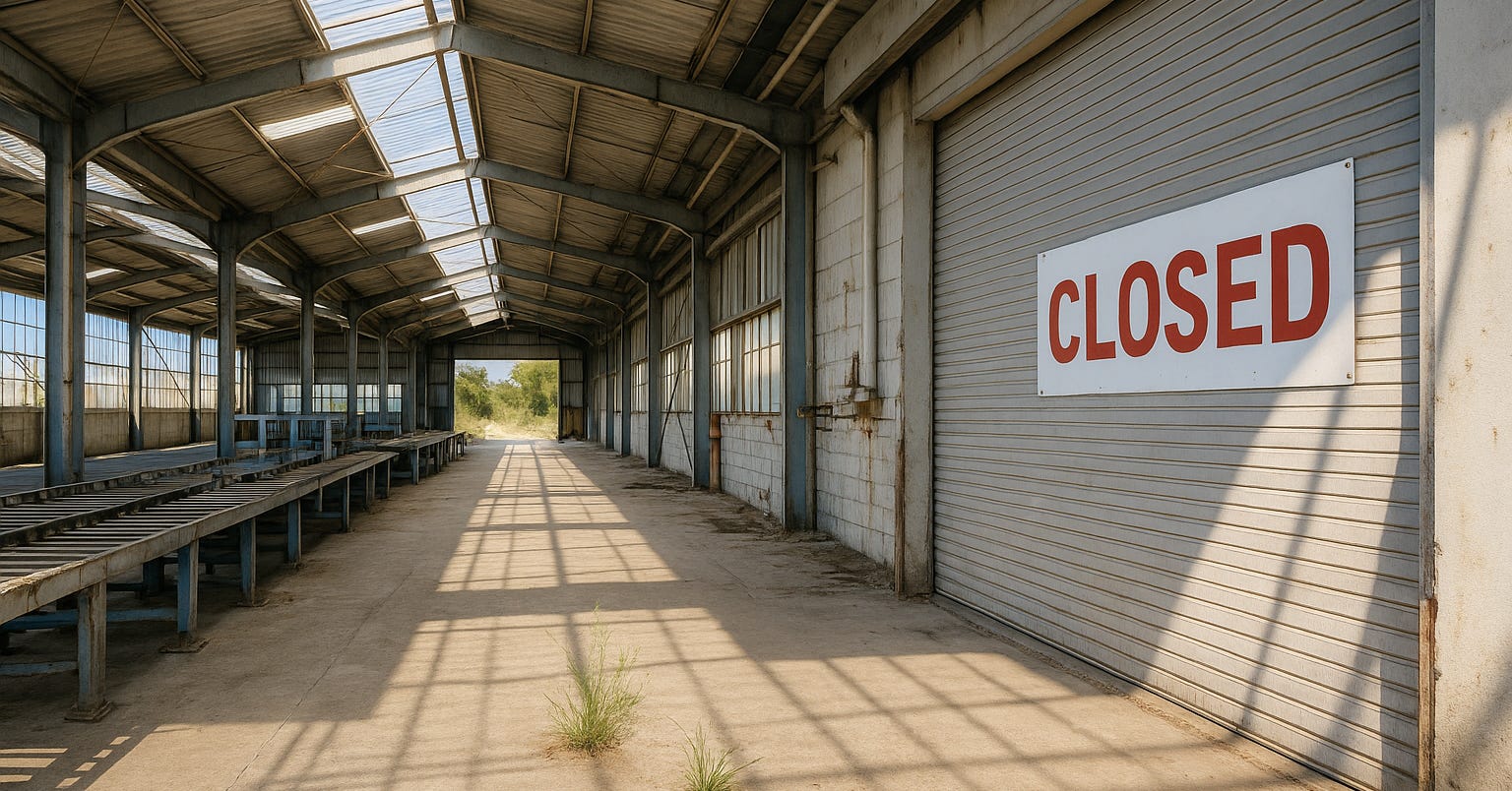
Part 1 of 3 — The Unmaking of a Nation Series
Australia still calls itself a wealthy, modern country. Yet scratch beneath the surface and you’ll see how fragile that wealth has become. We don’t make much anymore — not the things that keep a nation working.
Industry by industry, we’ve dismantled the foundations that once made us strong. We dig up the raw materials — iron, coal, gas, copper, lithium — ship them overseas and buy them back as finished products at a premium. It looks like prosperity on paper, but it’s really dependency dressed up as growth. That dependency carries a cost: the slow erosion of control, capability and confidence.
The Unmaking of a Nation
Once, we built things that lasted.
We made our own cars — Holden, Ford, Toyota and Mitsubishi — names that carried pride. Within a decade, they were gone. The factories closed, the suppliers folded and the towns built around them lost their heartbeat.
We refined our own fuel. Eight refineries once kept the nation moving. Today, there are just two — Ampol’s Lytton in Queensland and Viva Energy’s Geelong plant in Victoria — both surviving on government support. Almost every litre of petrol and diesel now arrives by ship. If the tankers stop, so does Australia.
We produced our own plastics and chemicals, the quiet building blocks of modern life. Qenos, our last polyethylene maker, shut its doors in 2024. The Gibson Island fertiliser plant in Brisbane, which once supplied half the country’s ammonia and urea, closed two years earlier. Now our farmers rely on foreign fertiliser to grow food in their own soil.
We made our own paper until the Maryvale mill stopped producing Reflex copy paper in 2023. Reflex, once proudly Australian, now comes by container ship.
We made glass until Oceania Glass in Dandenong entered administration and production began winding down.
Every time a factory closed, a quiet knowledge disappeared with it. Toolmaking, machining, glass-blowing, chemistry, pattern-cutting the skills that once defined us now scattered and faded.
The Thread We Let Unravel
We still grow the best wool in the world, around 280,000 tonnes of merino each year, but we’ve stopped doing much with it.
Almost all of it now leaves our shores unprocessed, mostly bound for China, where it’s scoured, spun and woven into fabric before returning as finished clothing. The mills that once hummed in Geelong, Goulburn and Launceston are gone. Only a few holdouts remain: Waverley Mills in Tasmania, Australian Country Spinners in Wangaratta and Merino Country in Queensland. Brave survivors, not an industry.
We export the raw fibre, import the fashion and call it a fair trade.
It’s the same story everywhere — cars, paper, glass, textiles, tyres, fertiliser, packaging and other essentials. One by one, we’ve outsourced the means to keep a country working.
The Fragile Future
We tell ourselves this is efficiency. That global supply chains are smarter, cheaper, inevitable. Yet what we’ve really done is trade resilience for convenience.
When COVID hit, we couldn’t even make our own masks or medicines. That was the warning shot. The next disruption — a trade war, conflict or shipping shock — could cut off the essentials: energy, food, communications.
If we can’t refine fuel, we can’t move.
If we can’t make fertiliser, we can’t grow.
If we can’t produce or repair the components that keep our systems running, we can’t function.
This isn’t nostalgia for the past, it’s about sovereignty — the ability to feed, fuel and defend ourselves when it matters most. Because a nation that stops making things doesn’t just lose jobs; it loses memory and control.
The Choice Ahead
Australia still has what it takes to rebuild — the resources, the intelligence and the people. What we lack is leadership and conviction.
We could restore manufacturing that adds value to what we mine and grow. We could invest in energy that industry can afford and in the skills that let us make, not just manage — because when you stop making things, you start losing control and once that’s gone, no amount of money can buy it back.
This isn’t about going backwards, it’s about remembering what independence truly means: the ability to build, fix and sustain ourselves when the world shifts.
So here’s the quiet question that leads us into the next part of this series:
What happens when we no longer control the technology that keeps the country running?
That’s where Part 2 begins — The Missing Brains: Australia’s Dependence on Foreign Chips.