

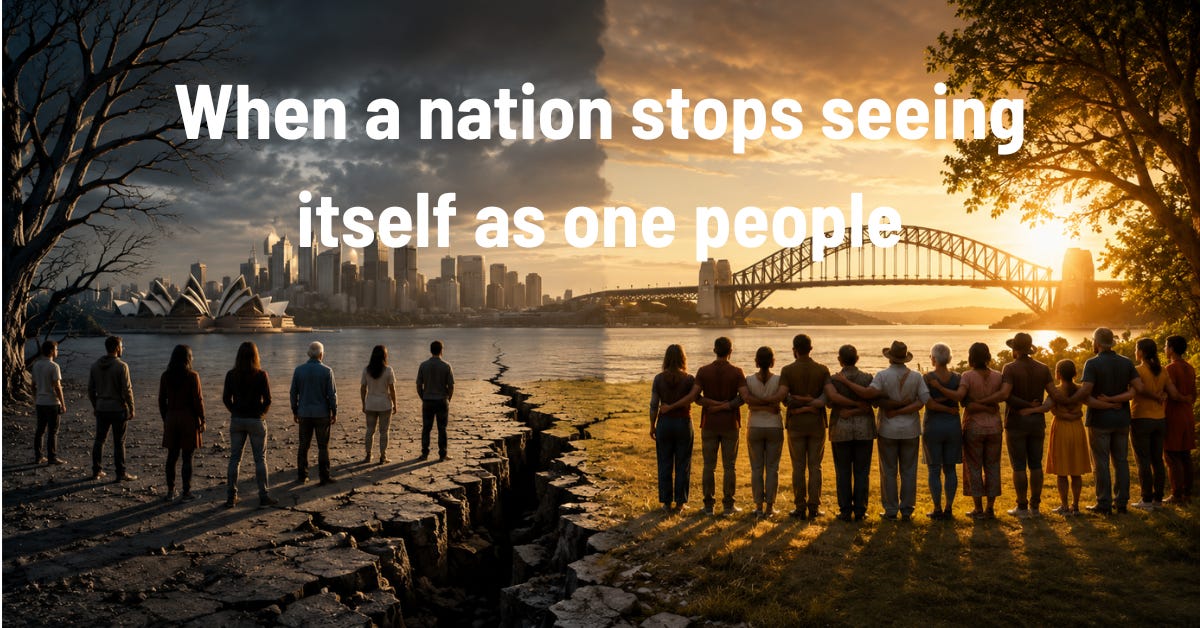
There was a time in Australia when people did not spend every waking hour measuring themselves against one another.
You were not told to see yourself first as old or young, male or female, Indigenous or non-Indigenous, privileged or oppressed. You were simply Australian and while we argued, disagreed and occasionally drove one another mad, there remained a quiet understanding that we were all standing on the same patch of ground trying to build something decent together.
That feeling is fading now, slowly at first, almost invisibly.
A phrase here, a government campaign there, another report explaining why one group is failing another and another politician discovering political currency in grievance. Eventually, if repeated often enough, people begin to believe the country is deeply unequal, deeply unfair and deeply divided.
The latest phrase rolling endlessly through politics and media is “intergenerational inequality”. It sounds harmless enough, reasonable even. Yet beneath the polished language sits a far more dangerous idea: the suggestion that older Australians somehow achieved their security unfairly and that the stability they spent a lifetime building now represents an injustice needing correction.
Many older Australians hear this and shake their heads in disbelief because they remember the years before the comfort. They remember the small homes, the overtime, the second jobs, the endless mortgage repayments, the fear of interest rates surging and the decades of quietly watching every dollar.
Nobody handed them security. They built it over decades, often without applause and certainly without sympathy.
Now many sit in homes they spent forty or fifty years paying off only to be spoken about as though they are hoarding wealth stolen from younger Australians.
None of this means younger Australians are imagining their struggles. Housing feels further away than it once did, living costs bite harder, secure work feels less secure and many young families wonder how ordinary people are supposed to begin.
These concerns are real. There is, however, a profound difference between fixing opportunity and manufacturing resentment.
A country that teaches the young to resent the old is planting something poisonous into its own foundations.
The truth is, most Australian families are not at war across generations. Parents are helping children with deposits. Grandparents are caring for grandchildren. Older Australians are quietly passing wealth, time and stability downwards every single day.
Yet politics has discovered division is useful.
Divide Australians by generation and both groups become emotionally invested. Divide them by race and identity and the arguments become even more consuming. Convince citizens they are victims of one another and they stop asking larger questions about the systems failing them all.
That is why almost every modern debate now arrives wrapped in the language of identity and imbalance.
The Voice referendum became one such moment. Regardless of how Australians voted, many sensed something larger beneath it — the idea that equal citizenship itself was slowly being replaced by identity-based politics. Not one people moving forward together, but separate groups negotiating power against one another.
The same pattern repeats elsewhere.
For decades Australians were told women faced systemic barriers across society. In many areas that was undeniably true, yet society changed. Women surged through universities, entered professions in huge numbers and increasingly occupy management and professional roles throughout the country.
Still the rhetoric of permanent imbalance continues, not because equality has not advanced, but because modern politics has become addicted to the language of grievance. There is always another imbalance to correct, another division to highlight and another group to convince they are unseen or unfairly treated.
The result is a country becoming more fractured, more suspicious and more emotionally exhausted.
Australians can feel it even if they struggle to describe it: the cautiousness now present in ordinary conversation, the fear of saying the wrong thing and the growing sense that speaking plainly about obvious realities can suddenly place someone outside polite society.
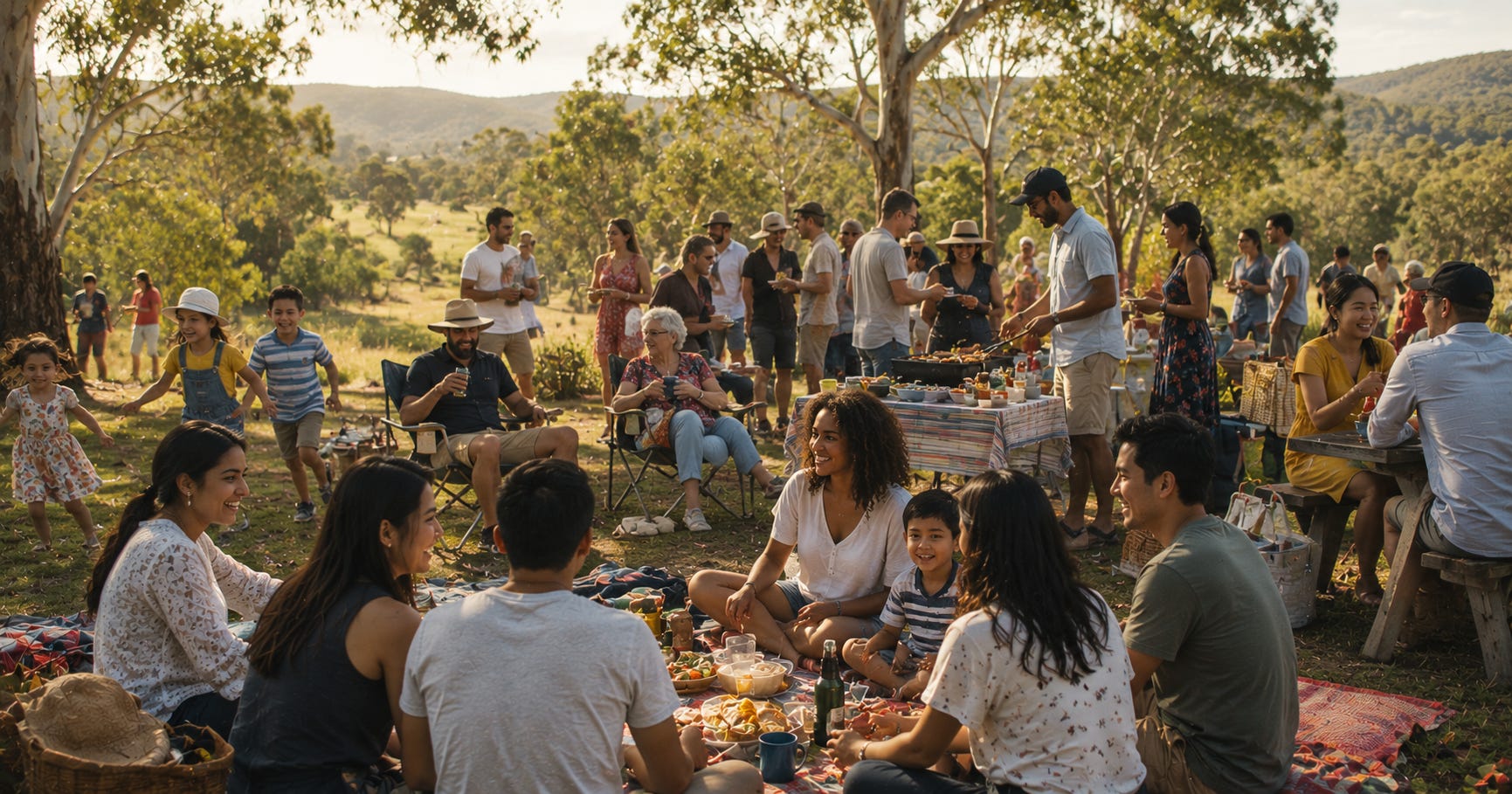
Most Australians do not wake each morning consumed by identity politics. They care about whether their children will be safe, whether they can pay their bills and whether the country still feels recognisably like home.
They want fairness, yes, but fairness built on shared citizenship, not endless division, because once a nation loses the ability to see itself as one people with a common future, trust weakens, cohesion weakens and belonging weakens.
Australia does not need more division dressed up as compassion.
It does not need governments endlessly sorting citizens into categories while the foundations beneath the country slowly weaken. It does not need young Australians taught to resent the old, men taught to apologise for existing or citizens taught to see one another first through race and identity before shared nationhood.
At some point the country must step away from the politics of fragmentation and rediscover something unfashionable but essential: a shared Australian identity.
Not an identity built on race or ideology, but on citizenship, contribution, fairness and mutual responsibility. A belief that Australians rise or fall together and that social cohesion matters more than political point-scoring.
Governments should stop inflaming generational resentment and instead focus on rebuilding opportunity — affordable housing, productive industries, reliable energy, stronger communities and an economy where younger Australians can realistically build the same stability their parents once pursued.
Older Australians are not the cause of every struggle facing the young, young Australians are not entitled for wanting a future and compassion does not require permanent national division.
The quiet majority still wants what it always has: a stable country, fair opportunity, safe communities and a sense that despite our disagreements we are still one people.
That spirit has not disappeared. It is simply waiting for leaders — and perhaps ordinary Australians themselves — willing to defend it again.