

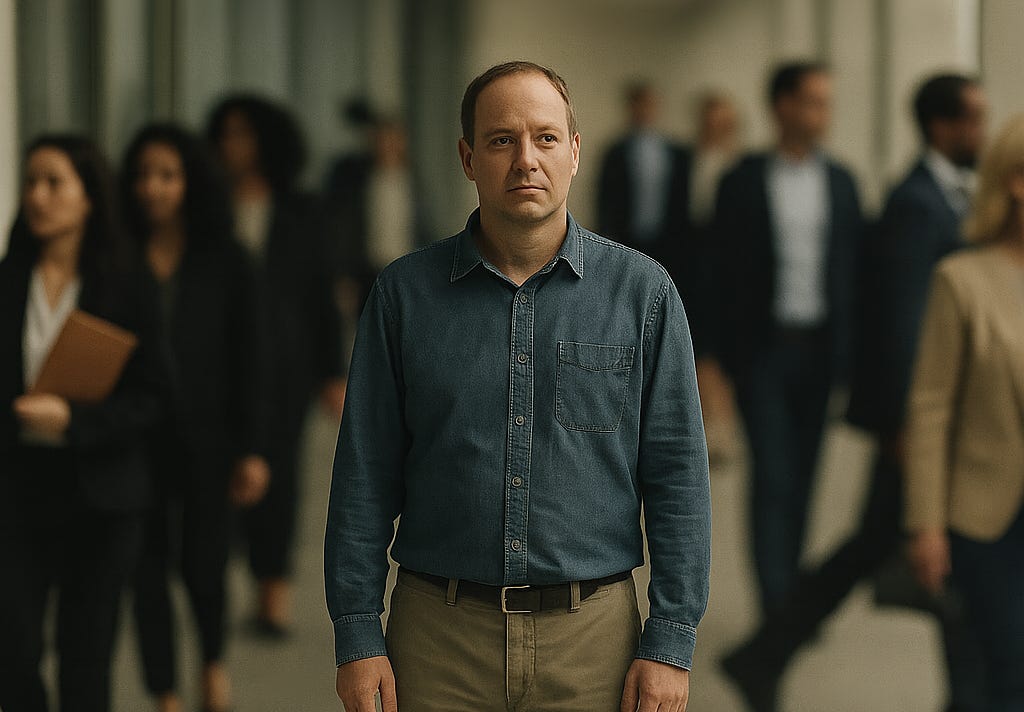
The other night, my partner came home from a leadership summit for managers of a government department — nothing particularly groundbreaking, just one of those all-day meetings you go to because you’re expected to. He sat down and over dinner quietly said, “I was one of 10 to 15 men in a room of around a hundred and twenty people.” It wasn’t said with any bitterness or drama, just a sort of disbelief. To be honest, I wasn’t surprised. I’ve started noticing the same thing myself — in workplaces, schools, community groups.
Diversity, Equity, and Inclusion (DEI) isn’t just a corporate buzzword anymore. It’s a full-blown agenda that seems to have crept into every corner of our institutions. Somewhere along the way, I can’t help but feel we’ve overshot the mark. We were supposed to be building a fairer society, right? One where everyone felt included. But now it’s beginning to feel like “inclusion” only applies if you fit a certain narrative. If you’re not ticking the right boxes — ethnically, sexually, ideologically etc — you’re not just unremarkable, you’re invisible. That’s what this is really about.
There’s a quiet but growing feeling that the average Australian — the one who isn’t part of a minority or waving an identity flag — is being slowly pushed out of the national conversation and worse, made to feel like a relic, like they’re part of the problem. We talk a lot about representation these days, but let’s be honest — who’s representing the middle? The hardworking, middle-class Australians who don’t have a “lived experience” that fits the script? The ones who just want a fair go, who pay their taxes, show up and contribute. In our effort to make sure everyone feels included, we’ve ended up excluding the very people who used to be the heart of this country.
The cultural majority is being treated like a footnote. The flag is contested, the anthem is up for cancellation. The concept of Australian identity — shared values, national pride, even our humour — is either sanitised or framed as outdated. I’m not saying diversity isn’t important, of course it is. I want everyone to feel like they belong here, but right now, that pendulum has swung so far that we’re at risk of becoming unrecognisable — a nation made up of interest groups, each vying for visibility, while the core — the part that holds us all together — gets chipped away. It’s starting to show in subtle ways. I’ve heard from people who feel uncomfortable speaking up at work meetings because they’re worried their views will be labelled as ignorant or insensitive. I’ve seen the job ads that read more like political manifestos than invitations to apply. I’ve listened to teachers who no longer know how to teach Australian history without being accused of offending someone. I’m sure it’s not just me. You can feel it. You can see it. People are withdrawing — not because they don’t care, but because they don’t feel welcome in spaces that were once theirs too.
The thing is, real inclusion shouldn’t mean overcorrecting to the point of imbalance. We can make room for different perspectives without erasing the centre. We can celebrate individual stories without losing our shared one. I worry we’re becoming a country of silos, not united by a common culture but divided by checklists and categories. The DEI agenda — however well-intentioned — is starting to feel more like a social sorting system than a movement for equality. That matters because when people stop feeling like they belong — when they start feeling like strangers in their own land — they check out, from their jobs, their communities, their country.
So here’s my question: what happens to a nation when its quiet majority no longer feels seen? I don’t have all the answers, but I do know this — if we want to bring this country together, we need to make room again for Australian culture. Not just the ancient, or the activist, or the imported. But the living, everyday, suburban culture that most of us still recognise. The backyard barbecues. The weird slang. The dry humour. The shared values. These are the things that millions of people from around the world have come to this country to be a part of. I want my kids to grow up feeling proud of this country. Not guilty. Not confused. Not silenced. And I want them to believe that being an average Australian is still something worth being. Let’s make sure that in our pursuit of diversity, we don’t forget who we are.
Want your voice heard?
Tell them that DEI has gone too far- the email addresses of the Minister and Liberal Shadow Minister for Employment and are below. Nowadays, a letter can have more impact. If that is what you would like to do their postal details are also below-
Amanda Rishworth MP
Minister for Employment and Workplace Relations-
email: amanda.rishworth.mp@aph.gov.au
mail: 232 Main South Rd Morphett Vale SA 5162
Tim Wilson MP
Shadow Minister for Industrial Relations and Employment
email: tim.wilson.mp@aph.gov.au
677 Nepean Highway Brighton East VIC 3187